10 Practice Mistakes Musicians Should Avoid
by Mitchell Estrin
Date Posted: January 20, 2021
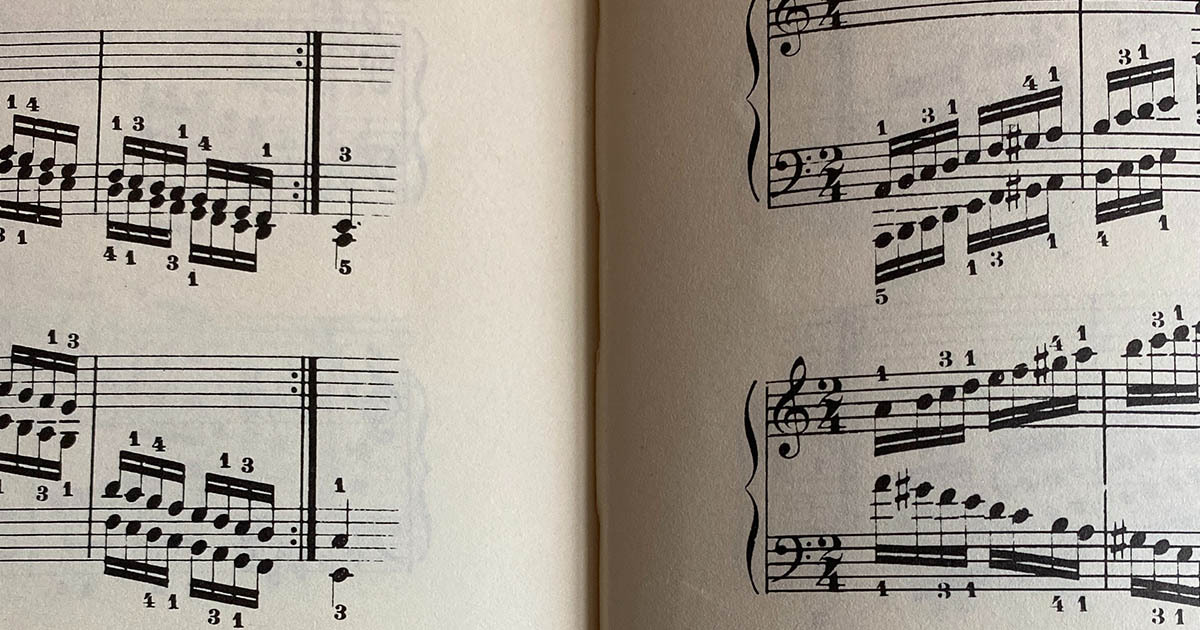
Practicing is the most important way for a musician to progress on an instrument. How you practice will dictate the speed and efficacy of your musical progression. The great trombone virtuoso Joe Alessi said it succinctly when he stated, “The goal is to get the maximum results in the minimum amount of time.” In order to achieve this, you must not practice in a haphazard way, but develop a structured routine that will assure positive and satisfying musical results.
Many musicians fall into bad practicing habits, and this can lead to frustration and a lack of positive results. I suggest that every musician carefully evaluate their practice routine, create winning strategies, and put them in place to assure good results. There are no mysteries here, just thoughtful planning and structuring of practice sessions.
To help my students develop good practice routines, I suggest they avoid these 10 practice mistakes.
1. Not having a plan going in.
Many students take their instrument out of the case and start looking through music to decide what they will practice.
Solution: Plan exactly what you intend to practice before your practice session. I decide the practice order for my next session (and put the music in order on my music stand) when I have finished packing up after a practice session.
2. Warming up by playing a few notes and then start practicing repertoire.
Solution: Create a thoughtful and structured warm-up routine. Warming up is the time to give yourself a lesson in fundamentals while allowing your muscles time to prepare for more rigorous playing.
My 30-minute routine begins with long tones and is followed by scales and articulation practice. I pay strict attention to all of my fundamentals while performing these musical calisthenics in order to reinforce good playing habits and strengthen my fundamental techniques.
3. Warming up without a metronome.
Solution: Use a metronome!
For long tones, you can set comfortable tempos and gradually get slower as you progress.
For scales, the metronome will keep you honest and help you to play evenly with a steady beat. Practicing out of rhythm will teach you to play out of rhythm with uneven technique.
4. Playing through a lot of music to see where this leads.
Solution: Think about what music you are going to practice and decide exactly what you are going to work on and why. What are you trying to improve and how are you going to address the problems you may encounter?
5. Thinking repetitions will solve technical problems.
Solution: Thoughtful and accurate repetitions with a high level of concentration will help to solve technical problems.
6. Playing for extended periods of time without taking a break.
Solution: Take a 5-10 minute break every hour. Your mind needs to relax and your muscles need to rest. Be sure to hydrate during your breaks. Taking breaks will help to prevent repetitive strain injuries.
7. Bringing life problems into your practice session.
Your mind must be clear and completely focused on practicing or else you will be wasting your time.
Solution: Take time to think before your session and compartmentalize your life problems and commit to revisiting them after your session. If the problems need immediate attention, delay your practice session until your mind can be clear and focused on practicing.
8. Leaving your cell phone notifications on.
Solution: Turn notifications off or, better yet, turn the phone off! The texts, emails, notifications, and voicemail will be waiting for you after your session. You can shut the world out for a couple of hours during your day to fully focus on your progress as a musician. If you utilize any apps during your practice sessions (metronome, tuner, etc.), put your phone on airplane mode.
9. Forgetting to always think about the line.
Solution: Play a singing and well-phrased musical line regardless of what you are practicing – long tones, scales, repetitive technical passages, lyrical passages, etc. Challenge yourself to always create a beautiful sound and create an artistic musical line, even in your warm-up!
10. Forgetting to enjoy playing your instrument and congratulating yourself for your progress.
Solution: Have some fun practicing music! Enjoyment is why we spend so many hours isolating ourselves to become more proficient in performing music. Give yourself positive reinforcement and a pat on the back when you progress. Look at the long term picture and see how far you have come over the past weeks, months, and years.
I hope this article will help you to avoid these 10 common practice mistakes. Happy practicing!

About Mitchell Estrin
Mitchell Estrin is Professor of Music Emeritus at the University of Florida where he was founder and music director of the University of Florida Clarinet Ensemble and a University of Florida Research Foundation Professor. He served as the Artistic Director of the Vandoren Clarinet Ensemble Festival and was founder of the Buffet Crampon USA Summer Clarinet Academy. Prof. Estrin was the 20th President of the International Clarinet Association (ICA). He is the author of the biography Stanley Drucker, Clarinet Master published by Carl Fischer and Writing the Vandoren WAVE published by CAMco. His critical edition of the Weber Concertino for Clarinet, Op. 26 is published by Jeanné.
Prof. Estrin is a 2023 recipient of Honorary Membership in the International Clarinet Association. This accolade, marking the highest honor in the clarinet world, is said to acknowledge individuals with a distinguished background in the areas of professional service, teaching, performance, and lifetime achievements.
Mitchell Estrin studied clarinet with Stanley Drucker at The Juilliard School where he received his bachelor’s and master’s degrees. His other influential teachers include Jerome Stowell, Walter Wollwage, Leon Russianoff, Larry Combs, Robert Bloom, and John Moses.
Prior to his academic appointments, he had a 25-year association with the New York Philharmonic. He performed in hundreds of concerts and on 19 international tours with the Philharmonic as principal, second, and E-flat clarinetist under music directors Alan Gilbert, Lorin Maazel, Kurt Masur, Zubin Mehta, Pierre Boulez, Leonard Bernstein, and many distinguished guest conductors including Erich Leinsdorf, Sir Georg Solti, Claudio Abbado, Klaus Tennstedt, Andre Previn, Sir Colin Davis, and Leonard Slatkin. He performed on dozens of recordings with the Philharmonic and on numerous occasions performed with the orchestra on the PBS award winning series, Live From Lincoln Center.
As an international concert artist, Mitchell Estrin has performed in over 40 countries on 5 continents. He performed and recorded the world premiere of The Shadows of October for clarinet and orchestra by Michael Whalen with the Janacek Philharmonic.
“This beautiful and lushly scored tonal piece…. is performed by clarinetist Mitchell Estrin…. He plays beautifully with a lovely colored tone.”
The Clarinet
As a chamber musician, he has performed with such notable ensembles as The Chamber Music Society of Lincoln Center, New Arts Trio, American Chamber Winds, at the Newport Music Festival, and was a founding member of the Amadeus Ensemble.
Prof. Estrin has an extensive discography of solo and chamber music and recorded hundreds of television commercials and Hollywood motion-picture soundtracks. He has performed and recorded with many leading popular artists including Emerson, Lake and Palmer, Peter, Paul and Mary, Ray Charles, The Fugees, Wynton Marsalis, Benny Golson, Smashing Pumpkins, and Natalie Merchant. His motion picture soundtrack credits include recordings for Columbia, Walt Disney, Paramount, MGM, 20th Century Fox, United Artists, and Warner Brothers on feature films including Aladdin, Beauty and the Beast, The Alamo, Intolerable Cruelty, The Score, You’ve Got Mail, Primary Colors, Fargo, Batman Forever, Interview with the Vampire, Home Alone 2, Pocahontas, Doc Hollywood, Regarding Henry, The Untouchables, Reds, and Dressed to Kill. His television credits include recordings for ABC, NBC, CBS, CNN, HBO, TBS, and ESPN. Prof. Estrin was principal clarinetist for the NBC 75th Anniversary Special; broadcast from the famed NBC Studio 8H in New York City. He has appeared on The Late Show with David Letterman, The Phil Donahue Show, the television series Nurse, and in Kramer vs. Kramer, the 1980 Academy Award Winner for Best Picture. His clarinet playing has also been heard on hundreds of television and radio commercials. The National Academy of Recording Arts and Sciences recognized him as a Most Valuable Player nominee for his outstanding performances in the recording studio.
Prof. Estrin has presented recitals, masterclasses, workshops, and seminars at many prestigious educational conferences and institutions. This list includes the Eastman School of Music, Peabody Conservatory, Arizona State University, Florida State University, University of Maryland, University of Alabama, University of Arizona, University of Illinois, University of Texas, Texas State University, Texas A&M University, Midwest Clinic, New York State School Music Association, Connecticut School Music Association, and Florida Music Educators Association. In 2019, he was a guest clinician in Australia at the University of Melbourne. He has performed in recital with clarinetists Stanley Drucker, Karl Leister, and Mark Nuccio.
Widely acclaimed as a conductor and proponent of the clarinet choir, Prof. Estrin has served as director of the International Clarinet Association ClarinetFest® College, Festival, and Professors Clarinet Choirs, Texas State Clarinet Fiesta Clarinet Choir, Oklahoma Clarinet Symposium Clarinet Choir, Texas Clarinet Colloquium Clarinet Choir, and United States Navy Clarinet Choir. He held a Guinness World Record for conducting the world’s largest clarinet choir (367 members) in 2019. He has conducted the University of Florida Clarinet Ensemble throughout the United States and Europe, including three feature recitals at the International Clarinet Association ClarinetFest®. The ensemble has produced four critically acclaimed CD’s for Mark Masters, Christmas Clarinets (2016), Clarinet Choir Classics (2012), Clarinet Thunder (2009), and Wind in the Reeds (2006). Each of these recordings was selected for the Grammy Nomination eligibility list. Prof. Estrin has authored multiple articles on the history, development, repertoire, and logistics of the clarinet choir.
As a music producer and annotator, he has worked on projects with such renowned artists as trombonist Joseph Alessi, jazz pianist Lynne Arriale, and saxophonist Mike Smith. He has produced five clarinet choir CDs for Mark Recording.
Prof. Estrin’s students have performed with such prestigious ensembles as the Chicago Symphony, Cleveland Orchestra, Cincinnati Symphony, Baltimore Symphony, Pittsburgh Symphony, Detroit Symphony, Louisville Orchestra, New York Pops, United States Army Band “Pershing’s Own”, United States Army Field Band, and West Point Band. His students hold educational positions at several major universities including Indiana University, University of Arizona, University of Florida, and University of South Alabama.
Mitchell Estrin is a Buffet Crampon Legacy Artist and performs exclusively on the Buffet R13 clarinet. As a Vandoren Performing Artist, he endorses and performs exclusively on Vandoren reeds (V.12) and mouthpieces (BD2). Prof. Estrin’s educational articles are published regularly in the Vandoren WAVE and his biography is listed in Who’s Who in Classical Music, Who’s Who in American Music, and Who’s Who in International Music.