30 Minute Practice Routines for Classical and Jazz Saxophone
By Dr. Donnie Norton
Date Posted: November 22, 2024

To Become the Best
If you want to become a better musician, you need to practice regularly. This is common knowledge even among non-musicians. But how much should you practice? That depends on how good you want to be.
Professional musicians have spent years practicing for hours a day, often beginning in middle school or high school, continuing through college and perhaps graduate school, and then continuing further throughout their careers. At some point, if you want to reach a high level of musicianship, you will need to adopt a similar regimen. However, it is possible to achieve noticeable improvement in a relatively short period of time with a far less demanding approach.
General Points
Before discussing what such an approach may look like, I’d like to make a few general points.
Consistency
Regardless of how long you practice, consistency is key. Practice every day if you can, perhaps even at the same time each day, and find a place to practice where you are comfortable and separated from distractions. Settling into a routine is essential to developing good practice habits.
Maintain Focus
It is important to be focused when you practice. When you go into the practice room, know what you are going to work on before you get there.
Most of us, if we are honest, know what we need to work on, but we sometimes lose focus and play things that we already know and are comfortable with, which doesn’t really help us get better. Other times, we get so overwhelmed with all the things we need to work on that we get frustrated and anxious and don’t accomplish anything. Setting realistic goals can help you make the most out of a practice session.
Quality Equipment
Make sure you are playing on good equipment. Play on an instrument that is in good adjustment, a mouthpiece that is comfortable, and a reed that is not too soft, too hard, or too old. When we play on poor equipment, practicing is not fun, and we can develop bad habits.
"Settling into a routine is essential to developing good practice habits." - Dr. Donnie Norton
How Much Should You Practice?
Now, back to the initial question: How much should you practice? Start with 30 minutes a day. If you don’t practice for at least 30 minutes a day, it will be difficult to make noticeable improvement. But 30 minutes of focused, intentional practice time should be enough to help you accomplish at least some of your playing goals.
If you don’t have 30 consecutive minutes in a day to practice, break it up into two 15-minute sessions. Keeping your instrument assembled and out on a stand with your reeds nearby will make it easier to get going.
What Should You Practice During Your 30-Minute Session?
Whatever you want to get better at.
- If there is something that you need to get better at, like a solo for a performance, practice that.
- If you are unhappy with your sound, practice long tones.
- If you keep messing up your scales, practice them until you can’t play them wrong.
Ideally, you will settle into a practice routine that allows you to maintain a balanced approach to improving your playing.
I tend to organize my practice activities into three categories: sound, technique, and repertoire.
Category #1: Sound
Sound is everything. It is the medium through which you express a musical idea, and it is how the listener perceives everything you play. Great musicians play with great sounds. No matter what you are playing, you should strive for a beautiful, personal sound, and in that sense, everything is a sound exercise. There are different aspects of your sound that require attention, including tone, vibrato, intonation, and your ability to play at different volumes.
Long tones, and variations of them such as timbre-matching exercises, can help you address all of these elements. I like to be prescriptive when I practice long tones. I don’t just play a note until I run out of breath and then go on to the next one. I like to time my long tones, usually based on how loud they are (e.g., the louder the long tone, the shorter I play each note), which helps me plan out my practice time and provides a sense of accomplishment when I am finished.
Category #2: Technique
The name of this category is a little misleading because there is technique involved in everything we practice. It takes technique to produce a beautiful sound, there are techniques that can help you transcribe jazz solos from a recording, etc. But this category generally includes practice exercises to help improve your finger speed, flexibility, and range.
The most common way of addressing these qualities in one’s playing is through practicing scales. I think scales are the most versatile and inclusive practice exercise. You can play them fast, slow, in any register, in any key, in different patterns, using different articulations, and in any combination of any of these elements. They help you work on sound, time feel, finger speed, and flexibility in different keys and registers. They also help us internalize melodic patterns that enable us to learn music, sight-read, and improvise. When practiced creatively, scales become not only vastly more interesting, but also much more practical and helpful.
Category #3: Repertoire
Repertoire is what we play for audiences. It includes solo works, etudes, ensemble repertoire, and jazz tunes. Learning improvisational vocabulary for jazz musicians, including transcribing solos, falls into this category as well.
Remember that everything we practice is meant to serve our ability to play beautiful music. Don’t practice long tones and scales and neglect learning repertoire. In a 30-minute practice session, you won’t have a lot of time to play repertoire, so focus on practicing passages, chord progressions, etc., that are difficult.
"Remember that everything we practice is meant to serve our ability to play beautiful music." - Donnie Norton
The following are sample plans for two 30-minute practice sessions on saxophone, one for classical and one for jazz. The possibilities for planning these sessions are infinite, so design something that is right for you.
30-Minute Classical Saxophone Practice Session*
Sound (10 minutes)
- Timbre-matching exercise: play middle D for four beats (♩=60), then play each note descending chromatically down to low D, going back to middle D in between each new note; then repeat this pattern up to high (palm key) D – 5 minutes
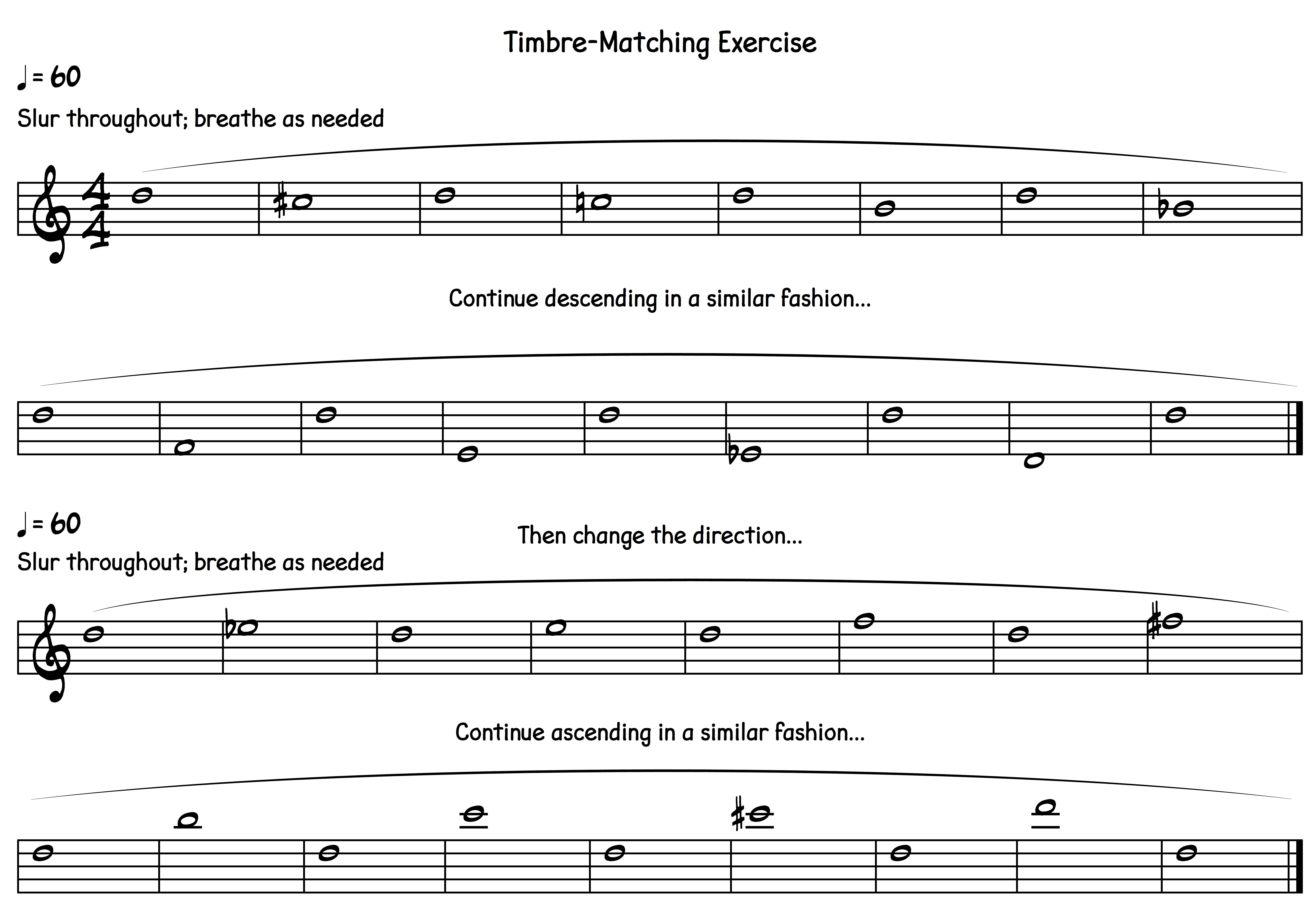
- Long tones: 30 seconds on each note from low D to low B-flat; 30 seconds on each note from high (palm key) D to high (palm key) F# – 5 minutes
Technique (7 minutes)
- Full-range chromatic and major scales in sixteenth notes (♩=120) – 5 minutes
- Extra time on F# and C# major scales, slow practicing without a metronome – 2 minutes
Repertoire (13 minutes)
- Ferling etude #1: focusing on ornamentation and rhythm in difficult passages – 5 minutes
- Glazunov Concerto: focusing on slow practice of difficult passages in the cadenza – 8 minutes
Total: 30 minutes
30-Minute Jazz Saxophone Practice Session*
Sound (10 minutes)
Timbre-matching exercise: play middle D for four beats (♩=60), then play each note descending chromatically down to low D, going back to middle D in between each new note; then repeat this pattern up to high (palm key) D – 5 minutes.
- Long tones: 30 seconds on each note from low D to low B-flat; 30 seconds on each note from high (palm key) D to high (palm key) F# – 5 minutes
Technique (8 minutes)
- Full-range chromatic and melodic minor scales (ascending mode only) in sixteenth notes (♩=120) – 4 minutes
- Practice all of the scales and arpeggios on “All the Things You Are” ascending to the 9th and back down in eighth notes (♩=80) using upbeat articulation – 4 minutes
Repertoire (12 minutes)
- Transcribe the first four bars of Sonny Stitt’s solo on “All the Things You Are” – 8 minutes
- Practice the melody and improvising over the form of “All the Things You Are” – 5 minutes
Total: 30 minutes
*Allow yourself some flexibility. If you are close to making progress on something but need a little more time, take it. If you find that something is coming easier for you than you anticipated, spend the extra allotted time on something else. These are just plans, and plans can change.
Other Ways to Practice Without Your Instrument
Finally, note that this article focuses on practicing in the traditional sense of playing your instrument, which you need to do regularly in order to improve.
But there are other ways in which musicians practice away from their instruments that are very helpful, including listening and singing.
You need to listen to great music all the time. In doing so, you will develop your own concept of what you want to sound like. Listening to music for musicians is like nutrition for athletes: it fuels us. Nothing will inspire you to practice like listening to music that you love. Singing is a great way of internalizing music that you are learning, and it can benefit your rhythmic integrity and intonation, among other things. You can practice listening and singing almost anywhere, walking to class, riding in the car, etc., so be sure to take advantage of this flexibility as a means of supplementing your instrumental practice.
I hope this helps! Best wishes for fun, productive practicing and achieving your musical goals.

About Dr. Donnie Norton
Donnie Norton is a saxophonist and woodwind performer based in Portland, OR. He has extensive performance experience in a variety of styles that include jazz, classical, world music, and musical theater. In addition to performing, his musical interests include jazz history and pedagogical methods for jazz and saxophone performance, and he has presented research at conferences of the Jazz Education Network and the North American Saxophone Alliance.
Don is an Associate Professor of Music at the University of Portland, where he serves as Director of Jazz Studies and teaches saxophone and academic courses in music and fine arts. He holds degrees from the University of Northern Colorado, the New England Conservatory of Music, and Northern Illinois University.