Clarinet Choir Rocks: Building Sound, Skills, and Community
by Dr. Todd Waldecker
Date Posted: April 14, 2026
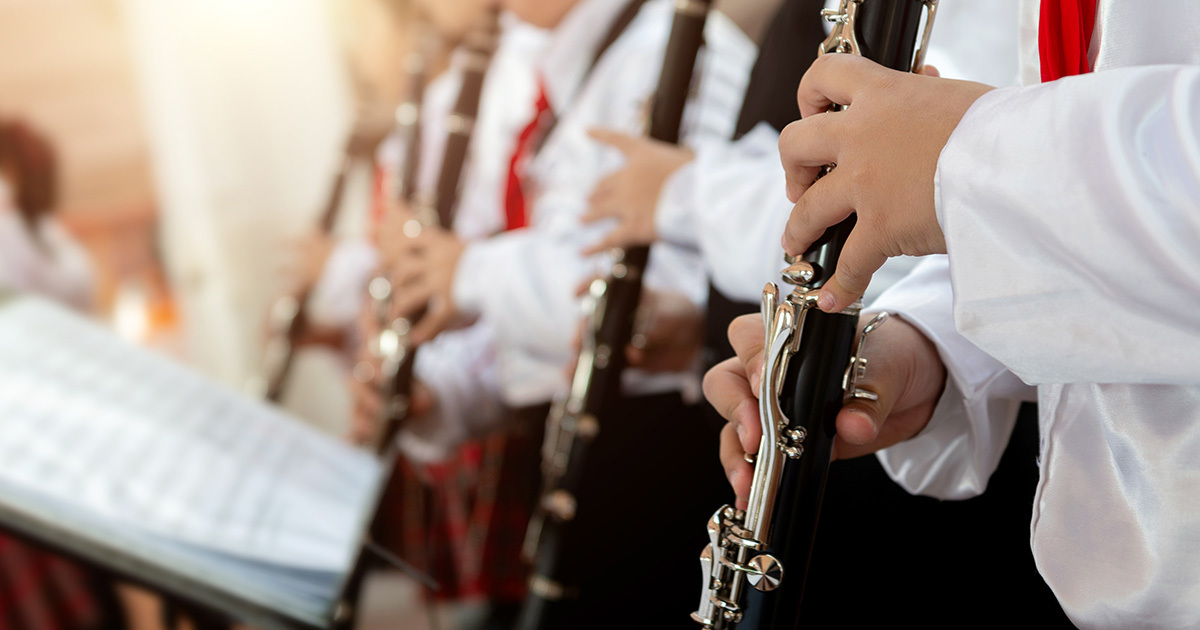
I first encountered the clarinet choir as a doctoral student at Indiana University and was immediately captivated by its rich tonal color, versatility, and remarkable pedagogical potential. That experience made a lasting impression. When I began my university teaching career I made clarinet choir a central part of my studio, and it has remained a vibrant and consistent presence ever since.
Semester after semester, students are drawn to the ensemble’s unique blend of expression, collaboration, and creativity. Clarinet choir offers something special: a musical environment where every voice matters, where students develop independence, and where a strong sense of community takes root.
It is important that this opportunity be introduced before students reach the university level. Young clarinetists deserve to experience the excitement of clarinet choir early in their musical journey, too. With that belief at the core of my teaching, I have spent more than 25 years developing and hosting an annual High School Honor Clarinet Choir, welcoming more than 1,000 students over the years from across the region to our campus. For many, it is their first exposure to this dynamic ensemble, and often a transformative one.
If you have considered starting a clarinet choir in your own program or community, now is the time. Whether your goal is to expand musical opportunities, enhance your teaching, or build student engagement, clarinet choir is both accessible and deeply rewarding.
Why Start a Clarinet Choir?
Quite simply, it sounds amazing! With its rich sonority across soprano, alto, bass, and contra voices, the clarinet family creates one of the most distinctive ensemble timbres in music, often described as a “living pipe organ.”
The educational benefits are equally compelling:
- Clarinet choir strengthens your entire band program: The clarinet section is the heart of the concert band, and improving it elevates the full ensemble.
- Clarinet choir builds independence and leadership: Without a large ensemble to hide in, every student becomes accountable and musically engaged.
- Clarinet choir improves fundamentals: Tone production, technical fluency, intonation, and articulation become more refined.
- Clarinet choir develops expressive playing: Phrasing, nuance, and tonal awareness are heightened because every player is heard.
- Clarinet choir challenges lower voices: Bass and contra players take on more responsibility by anchoring the sound and rhythm of the ensemble.
Getting Started
While a university clarinet choir may include Eb, Bb, alto, bass, and contra clarinets, most middle and high school programs can, and should, start simpler.
- You can begin with just Bb clarinets and a few bass clarinets. No need to have all the auxiliary instruments in your ensemble - especially when starting out.
- To optimize balance in the ensemble, use the pyramid theory with more players on lower parts and fewer on upper voices
- If you do select a piece that is written for full clarinet choir instrumentation, don’t let missing instruments hold you back.
Adapt and substitute parts:
- Arrange the Eb soprano clarinet part for an upper Bb soprano player
- Arrange alto clarinet parts for lower Bb soprano clarinets
- Bb contra clarinet parts can be doubled by bass clarinets and played down the octave
- Good news: Many publishers now include Bb alternate/transposed parts for the auxiliary Eb, alto and contra clarinets. It’s a real time saver!
...the clarinet family creates one of the most distinctive ensemble timbres in music, often described as a “living pipe organ.”
Repertoire
So, you’ve decided to start a clarinet choir, now the question becomes, what repertoire is both appropriate and available?
Luckily, you don’t need to invest in a large amount of new music right away. You likely already have materials in your library that can get your ensemble started.
- Begin with duets and trios and assign multiple players per part.
- Then expand to quartets, with bass clarinet doubling the lowest part at the octave
- To let you in on a little secret, quartets can work beautifully in a full clarinet choir setting, something we regularly do with our university ensemble.
Transcriptions
If you do begin to shop for clarinet choir repertoire, you may find that much of it consists of transcriptions. This stems from a long-standing practice of drawing from orchestral and band literature. The clarinet choir’s range of voices supports this approach, creating depth and color while opening the door to repertoire students might not otherwise play.
- Many excellent transcriptions of masterworks are readily available through established publishers and distributors. Kendor and Southern Music are great places to start.
- One arranger we frequently turn to is Matt Johnston of UMMP (ALRY Publications), whose catalog features engaging, fresh repertoire across a wide range of ability levels.
- Other sources of transcriptions and original composition are available at Clarinet All Music (CAMco), Sheet Music Plus, Whichpond Music and J.W. Pepper.
- Free online and public domain selections are available at IMSLP (International Music Score Library Project) and Clarinet Institute of Los Angeles.
- Our ensemble has had great success performing video game, film, and pop arrangements available from online sources, many of which are offered at no cost.
- Be mindful of repertoire that centers all attention in the upper parts. Selecting music with more balanced writing helps keep all students involved.
Newer Compositions
As enthusiasm for clarinet choir grows and commissioning projects gain support, the repertoire continues to expand with new compositions. While many of these pieces may be too advanced for developing ensembles, it is important to support these composers and work toward programming their music as students and ensembles progress. Our ensemble has enjoyed new works by Alexis Ciesla, Nicole Chamberlain, Michele Mangani, Mike Curtis, Paul Saunders, and others.
Some Practical Tips
The clarinet choir is an excellent ensemble for fostering student growth. It strengthens independence, leadership, and confidence while encouraging active listening and collaboration. Here are a few ideas and insights I have gathered over the years:
- Rotate parts between sections so students understand each voice’s role. Playing melody, harmony, and accompaniment builds well-rounded musicianship.
- Try to place several experienced, confident players on the lower voices. These parts anchor pitch, tone, and rhythm, providing stability for the entire ensemble.
- Rotate auxiliary instruments so more students experience E-flat, alto, and contra clarinets. This builds versatility and a stronger understanding of balance and blend.
- Encourage soprano players to also perform on bass clarinet. Bass clarinet playing can help a soprano player with air support, embouchure flexibility, and a broader sense of ensemble sound.
- Ensure all students use their own mouthpieces and reeds when playing shared auxiliary instruments to promote hygiene and consistency. A simple labeled pouch system helps keep materials organized and accessible.
A Few Instrument-Specific Tips
- Bass Clarinet: Keep school instruments in excellent working condition. Regular maintenance is essential, as poorly functioning instruments can quickly frustrate students and limit progress.
- Eb Clarinet: Best suited for players with strong pitch skills. Good equipment enhances response and tuning.
- Contra Clarinet: A valuable addition, but not essential. Use bass clarinets doubled down the octave to create similar depth.
- Equipment: Consistent, high-quality mouthpieces and reeds are key. Whenever possible, encourage students to invest in their own setup for consistency and growth.
Try Adding Percussion
- Incorporating percussion, especially drum set in lighter tunes, can enhance rhythmic precision, reinforce style, and elevate the ensemble’s overall energy. It also adds a sense of excitement, with the drummer often bringing a unique presence that students find engaging and motivating.
Programming Ideas
Clarinet choirs provide an ideal setting for creativity and variety. Lean into the ensemble’s distinctive sound and try imaginative programming. Here are a few ideas we have found successful:
- Consider organizing themed concerts, such as holiday programs, film music, or a creative Halloween “Scare-inet” event. These themes provide a unifying concept, help with repertoire selection, and often increase audience interest and attendance.
- Solo features can be a powerful addition to any concert. Inviting students, alumni, or guest artists to perform with the ensemble not only enriches the program but also inspires current players.
- Arrangements of clarinet concertos by Mozart, Weber, and others, bring important literature into the clarinet choir setting. These arrangements provide challenging and rewarding experiences for both soloists and ensemble members.
- If you plan to highlight more than one soloist, select pieces that distribute the spotlight. Shared-feature works and lighter selections, including Clarinet Polka or Leroy Anderson’s Clarinet Candy, create an engaging and inclusive performance experience.
More Ideas to Build Musicianship, Leadership, and Community
Clarinet choir is an ideal environment for strengthening musicianship, encouraging leadership, and fostering a sense of community. You might consider trying some of the following ideas:
- Encourage conductor-free performances to strengthen listening, communication, and ensemble awareness. Students learn to rely on each other rather than a podium.
- Invite students to arrange their favorite tunes for the group. Video game music, in particular, is highly popular with our university ensemble.
- Rotate student conductors, guest conductors, or even community members such as a principal or parent. This adds variety and keeps rehearsals and performances fresh.
- Bring alumni back to perform alongside current students. This builds tradition and gives younger players role models to look up to.
- Perform for beginning clarinet students and invite them to join for a simple piece. Experiencing the full sound of a clarinet choir can be motivating and memorable.
- Schedule performances in community spaces such as retirement centers, churches, and festivals. These settings provide meaningful performance opportunities and outreach.
- Organize a chamber music concert and collaborate with other small ensembles.
- Keep an open mind and invite student input. Their ideas often lead to creative and engaging projects you may not have considered.
Final Thoughts
Clarinet choir is more than an ensemble, it is a powerful teaching tool and a community builder. With appropriate repertoire, thoughtful part assignments, creative programming, and opportunities for leadership, students gain skills that extend far beyond the rehearsal room. There has never been a better time to bring this dynamic and rewarding experience to your students. After more than 25 years of seeing its impact firsthand, I can say with confidence: Clarinet choir truly rocks, and it can transform your program in ways that are both immediate and lasting.
About Dr. Todd Waldecker
Dr. Todd Waldecker has served on the Middle Tennessee State University School of Music faculty for more than 25 years, teaching clarinet performance, chamber music, and pedagogy. He is also on the faculty of the Tennessee Governor’s School for the Arts, where he works with advanced high school clarinetists from across the state.
An active performer, Waldecker has appeared as a soloist and chamber musician throughout the United States, Europe, Asia, and South America. In Nashville, he is Principal Clarinet with the Nashville Opera and performs regularly with the Grammy Award–winning Nashville Symphony. He is also active in the city’s recording industry, contributing to film, television, and video game projects.
At MTSU, he directs the Clarinet Choir, which has performed by invitation at several International Clarinet Association conventions. In 2001, he founded the MTSU High School Honor Clarinet Choir, introducing hundreds of students across the Southeast to the ensemble.
Graduates of his studio hold positions as university faculty, educators, orchestral and military musicians, and in other music-related fields. They have achieved recognition in national and international competitions, including MTNA and the International Clarinet Association competitions.
Waldecker holds degrees from Indiana University (D.M.), Yale University (M.M.), and the University of Missouri (B.M.). His principal teachers include Howard Klug, Eli Eban, James Campbell, Alfred Prinz, David Shifrin, Paul Garritson, and John Patterson.
He is a Buffet Crampon Artist and Vandoren Artist Clinician.