Overcoming & Preventing Musical Injury: Strategies for Healthy Playing
by Dr. Jackie McIlwain
Date Posted: November 02, 2017
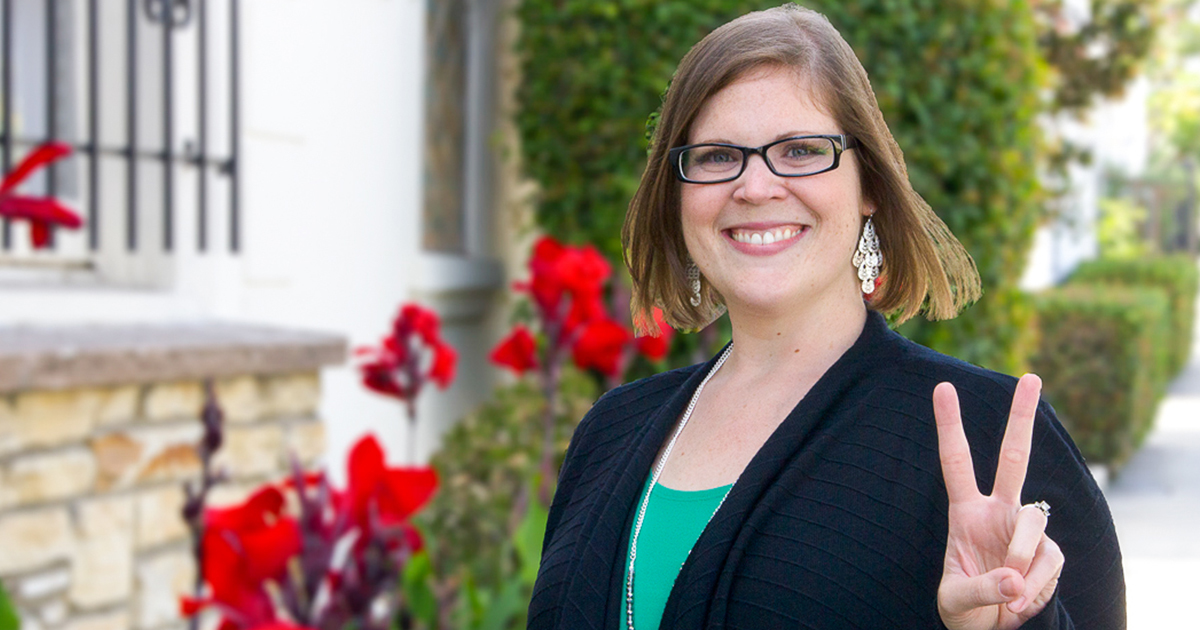
Dr. Jackie McIlwain is a Vandoren Artist-Clinician. The goal for the Vandoren Artist-Clinician program is to enhance the quality of the music experience through education and the assistance of Vandoren. These highly trained professional educators and performers will engage your students through educational and fun sessions. The clinics they conduct cover a broad spectrum of topics and, based on your input, can be customized to fit the needs of your students. Contact us today to arrange your free Vandoren clinic.
Musicians Dealing with Injuries
I have done quite a bit of research on musicians’ injuries and find it staggering the amount of musicians who have experienced a performance-related injury.
Many of us are not sure what we need to do to prevent it or how to approach the healing process. I would first like to share my personal journey of how I overcame a career-threatening injury and why I am such an advocate for full body awareness while playing one’s instrument. I will soon be sharing more specific information to help you and your students.
Jackie's Background
As a sophomore clarinet performance major, I experienced increasing pain in my right forearm, wrist, and thumb. My clarinet professor, who is an incredible musician and teacher, worked with me on hand position over the course of months but nothing seemed to help. The pain continued to worsen and my arm began to go numb in practice and performance. I remember performing in recitals in which my fingers, hand, and forearm went completely numb, but I kept playing because my mind was repeating “the show must go on.” Muscle memory carried me through those performances.
Alexander Technique
It was at this point when my professor suggested I see an Alexander Technique (AT) teacher who happened to be on faculty within our School of Music. I had no idea what to expect, nor did I have a clue as to what AT was or how it could help me.
The first activity she had me do was walk down the hallway. Upon return, she pointed out that I habitually kept my right arm and shoulder raised at all times. She moved my arms in a very delicate fashion to help me release the tension, along with showing me floor exercises that made me realize the drastic difference of tension between my left and right sides.
Awareness and Improvement
This was it for me, I was hooked. The observation of tension in my arm was fascinating to me, however, the biggest change was learning how to release the arm muscles. It took a period of months of completing the exercises daily and continual attention to my arm while playing clarinet, as well as throughout the day without my instrument. My symptoms finally lessened, but was still present at times. This was such improvement that I was absolutely enthralled with this method of body awareness and continued studying and practicing it diligently.
Difficulties in College and Graduate Studies
I finished my undergraduate degree and felt like I had been healed and no longer needed to practice these methods. I went on to graduate school and within a year my arm was hurt even worse. At this point, my right arm would change colors when I played clarinet! All I had to do was raise my arm and within a few seconds it would be ghostly white. Upon returning it to my side it became bright red. I also experienced constant tingling at my wrist. I saw a total of nine doctors without a concrete diagnoses. I was falsely diagnosed with Carpel Tunnel Syndrome, Raynaud’s Syndrome, possible Cubital Tunnel Syndrome, but after much research, I finally discovered (which was later confirmed) I had Thoracic Outlet Syndrome. This syndrome is when the main nerve and artery that extend from the thoracic cavity into the arm are compressed under the clavicle due to tension. I had to take four months off of playing clarinet in order for the tingling in the wrist to subside. I also started pursuing body awareness more diligently as I had a few years prior. The more I studied AT, which included principals of Body Mapping, the more I was able to play without pain.
The Road to Recovery
After healing for the second time, I continued my studies and finished my Doctor of Music degree in 2010. I rarely experience pain caused by playing my instrument, but when I do I realize I need to listen to my body more carefully. Perhaps I need more sleep, more down time to allow my body to release tension, or a massage! Because I have had to listen to my body so much, I have learned its warning signs and have been able to maintain a healthy performing schedule. I have since started teaching clarinet at The University of Southern Mississippi and have become a licensed Body Mapping teacher. I will soon offer a Body Mapping course through the university in addition to private Body Mapping lessons.
Two Body Awareness Methods
If you are not too familiar with the body awareness methods I have mentioned, I will do my best to give you my own explanation for these two methods, both in which I believe have tremendous value for everyone, but especially performers.
Both methods are within the field of somatics, which is the study of how the body moves.
Alexander Technique
F.M. Alexander was an actor who repeatedly lost his voice in performance. After seeing countless doctors and following all of their suggestions without success, he discovered by using mirrors that each time he began to recite, he brought his chin forward and up. This extra musculature effort would cause his voice to disappear in the middle of a performance.
By studying the body and spending much time in front of a room of mirrors, Alexander created a method to help other performers to use their bodies in effective and efficient ways. My personal experience with Alexander Technique included learning about basic anatomy and physiology, learning to be aware of my entire body with and without my instrument, and how we are intended to move.
Body Mapping Explained
Body Mapping was born from Alexander Technique by Barbara Conable, an internationally renowned AT teacher, and was designed specifically for musicians to learn basic anatomy and physiology of the body and how that knowledge can help free tension and allow freedom to create music as we intend to without limitation or pain.
Each person has a body map in their mind of how their body is constructed and how it should move. If one aspect of this is cloudy or inaccurate, then the movement will be not be efficient.
Therefore, in Body Mapping, we discuss various parts of the body, how they are all connected, and the overall alignment. Body Mapping can be taught via private lessons and the six-hour course entitled “What Every Musician Needs to Know about the Body.” The course is divided into six topics: Movement, Senses, and Attention; Balance; Breathing; Arms; Legs; and Application, which usually consists of a master class.
Teaching These Techniques
Having overcome a career-threatening injury with the help of Alexander Technique and Body Mapping, I feel it is my mission as a music educator to adjust my pedagogy in a manner that will foster learning with correct basic anatomy knowledge and body awareness while making music.
Many fine musicians are not as fortunate as myself to have had the opportunity to study any method within the somatic field, but with lessons and classes being taught via the internet, every musician can have this opportunity. If you are interested in learning more about Body Mapping, you can visit bodymap.org or email me at jacqueline.mcilwain@usm.edu

About the Author
Dr. Jackie McIlwain studied clarinet at Middle Tennessee State University (B.M.), Indiana University (M.M.), and Florida State University (D.M.) with Dr. Todd Waldecker, Prof. Klug, and Dr. Frank Kowalsky as her respective major professors. Each degree earned was in clarinet performance, however, Dr. McIlwain approached her studies with music education and pedagogy in mind. She earned a Certificate for College Teaching at FSU and a cognate in music education at IU.
Dr. McIlwain began teaching at The University of Southern Mississippi in 2013 after having teaching posts at Southeastern Louisiana University and The Florida State University. She has cultivated a positive, encouraging, and safe studio atmosphere for students to flourish as themselves. This holistic approach allows students to express themselves freely as a person and musician, which is the prime state for growth and maturation, both personally and musically.
Performing is an exhilarating experience for Dr. McIlwain who enjoys keeping a busy performance schedule. Dr. McIlwain is dedicated to conveying musical intention in any format or venue, but particularly enjoys presenting solo recitals featuring a variety of genres. She performs solo recitals often at USM, various music conferences, universities across the country, and festivals around the world.
The orchestral performance schedule remains consistently active as the second clarinetist of the Meridian Symphony Orchestra and Bass Clarinet/Eb clarinetist of the Mississippi Symphony Orchestra. Dr. McIlwain also regularly performs with the Mobile Symphony Orchestra and Gulf Coast Symphony Orchestra. Other groups she has performed in include the Northwest Mississippi Symphony Orchestra, Tallahassee Symphony Orchestra, and Tennessee Philharmonic.
Chamber music has been an exciting venture with many wonderful colleagues. Dr. McIlwain has participated in Category 5 Wind Quintet and Magnolia Reed Trio, both composed of USM School of Music faculty. These groups have taken regional, national, and international stages in many contexts including featured guest artist teaching and performing contracts, conference invitations, and performances for the International Double Reed Society and International Clarinet Association.
The most recent recording of Dr. McIlwain can be heard on her husband’s, Ben McIlwain, first solo CD entitled indefatigable in which she performed Alan Theisen’s Symphony No. 2: Pas de deux in 2022 with Dr. Ellen Elder, piano. The chamber version of this work was most recently performed at the International Clarinet Association’s ClarinetFest and the International Trombone Festival. She partnered in the commission of this work and premiered it with the USM Wind Ensemble and also performed it with the Middle Tennessee State University Wind Ensemble. Dr. McIlwain was also invited to perform and record Joseph Schwanter’s Concerto for Wind Orchestra: Luminosity with the USM Wind Ensemble, which can now be found on Naxos.
While a music student, Dr. McIlwain experienced a performance-related injury that posed a significant threat to her career. After finding the Alexander Technique and Body Mapping she was able to recover and create a healthier and more mindful approach to music that inspired a survey of over 600 college-aged clarinetists as the basis for her doctoral treatise. When she began teaching a full studio Dr. McIlwain quickly realized that she could recognize alignment and body-use issues in her students but wasn’t sure how to address these interferences. After this realization, she started the training process to become a Licensed Body Mapping Educator. After completing the training in 2017 Dr. McIlwain was quick to incorporate the training into her clarinet teaching and has cultivated a culture of mindfulness and attention to the body and mind within her studio. Dr. McIlwain has been a member of the Association for Body Mapping Education since 2014 and is currently serving as a training mentor.
As an inspired teacher, Dr. McIlwain is co-author of three upcoming publications: Body Mapping for Clarinetists: New Frontiers in Clarinet Pedagogy published by GIA Publications, The Breathing Book for Clarinetists, and Flow Studies for Clarinetists, both of which are published by Mountain Peak Music. One of the greatest pleasures in her career is to share her knowledge of Body Mapping and clarinet pedagogy. These books bring her two passions together as a guide for all clarinetists to incorporate principles of Body Mapping into their everyday performance and teaching.
Quality equipment that feels and sounds great is essential for all performers, which is why Dr. McIlwain chooses to perform on Buffet clarinets and Vandoren mouthpieces, reeds, and ligatures. In 2017 Vandoren USA reached out to Dr. McIlwain to recruit her as a Vandoren Artist-Clinician. This position allows her to visit middle and high schools and bring equipment for the students to try. This outreach has proved to be beneficial to the surrounding communities.
Dr. McIlwain has been a devoted member of the International Clarinet Association for two decades and is honored to have recently been appointed the Mississippi State Chair.
Vandoren Artist-Clinicians
The goal for the Vandoren Artist-Clinician program is to enhance the quality of the music experience through education and the assistance of Vandoren. These highly trained professional educators and performers will engage your students through educational and fun sessions.
View More