When Should a Student Get a New Mouthpiece? Four Questions Before You Decide
by Don Stinson
Date Posted: May 20, 2026
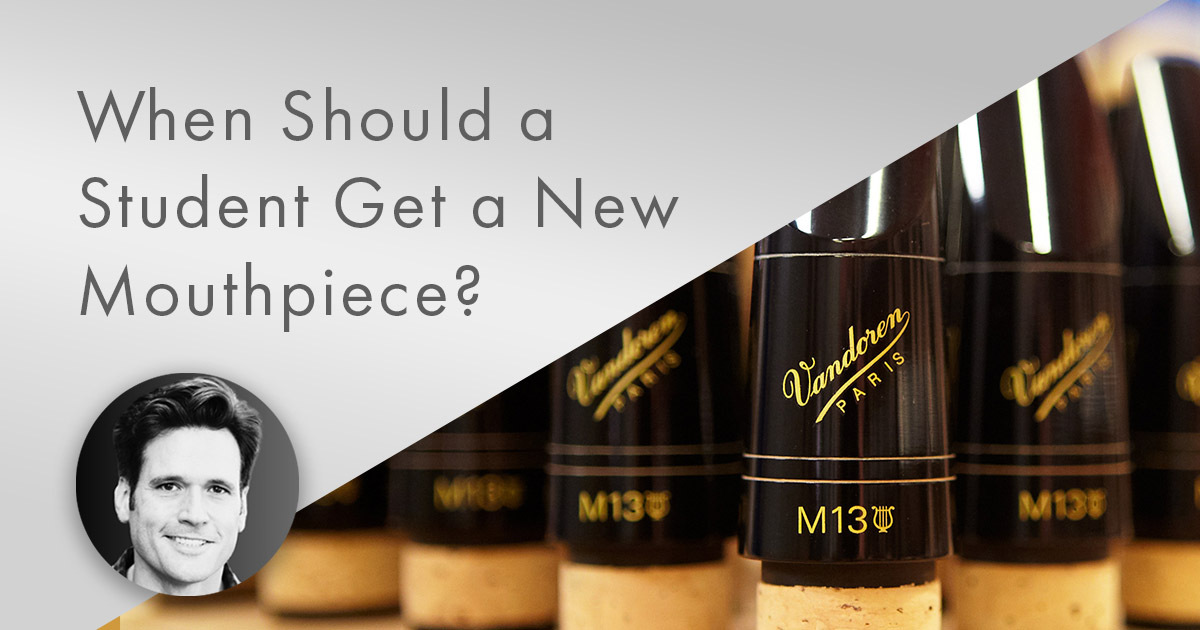
A few weeks ago, one of my alto players came up after rehearsal and said "I don't sound good."
He wasn't wrong. His tone was thin and a little pinched, and he'd been stuck there for months. His parents had asked me — twice — whether it was time to look at a step-up horn or try art class instead.
I said to hold off. We tried a different mouthpiece instead. Two weeks later he sounded like a different player. Same horn. Same reeds. Same kid.
I've had versions of this conversation over a hundred times in my career, and it almost never starts with the parent or the student knowing what's actually wrong. They just know something isn't working.
Our job as directors is to figure out which of the four or five possible answers is the real one before anybody spends money.
The Four Questions I Ask Before Changing Anything
Before I recommend equipment changes to a student, I run through four questions. Some directors do this on autopilot. If you're newer to teaching, having it written down helps.
1. Is the Student Physically Set Up to Succeed?
This one comes first because it's the answer more often than people expect. Also, it’s free and you probably have a limited budget.
What to Check First:
- Posture
- Hand position
- Embouchure shape
- Air support
- Reed placement on the mouthpiece
- Where the neck strap is sitting on a sax player and whether the height puts the mouthpiece at the right angle into their face
- Where a clarinetist's thumb is sitting on the thumb rest, and whether their instrument has an adjustable rest that's never been adjusted
- Whether the student is breathing from the diaphragm or the shoulders
- Whether they're holding the horn too far up or down — the angle of the instrument changes everything about how the air enters the mouthpiece.
I'd guess 30 to 40 percent of the "I don't sound good" conversations I've had ended right here. The horn was fine. The mouthpiece was fine.
The kid was sitting like a question mark and trying to play with air that wouldn’t even blow out a birthday candle.
If the answer to question one is "no, they're not physically set up," fix that first. Give it a couple weeks, then re-evaluate.
2. Is the Reed Working?
A bad reed makes a good player sound like a beginner. If a student is fighting a reed, I say, “let me see that thing.”
Things to Check:
- How old is it?
- Is it warped?
- Does it have a crack you can only see when you hold it up to the light?
- Is it the right strength for where the student is now, or is it the strength they were on a year ago when they started?
Strength matters more than people realize. A student who's gained embouchure strength on a 2.5 will sound thin and unfocused on a 2.5 they've outgrown — but moving up to a 3 isn't always the answer either.
Sometimes the answer is a different cut at the same strength. A traditional cut and a filed cut at the same number play very differently.
If the reed is the problem, you'll usually know within one or two new reeds rotated in.
3. Has the Student Outgrown Their Current Setup?
This is where you can start to consider mouthpieces.
Beginner mouthpieces are designed to be forgiving. They have a relatively closed tip opening and a short facing, which means a student can produce a sound without much air or much embouchure control.
That's the right design for a beginner. It's the wrong design for a junior who's been playing for five years.
Here are the signs I look for:
- A student who plays well in the practice room but disappears in the ensemble
- A student whose tone is acceptable at mp but falls apart anywhere above mf.
If this is the case, they may have outgrown their equipment. The mouthpiece is holding them back from putting a full sound through the horn.
This is when an equipment change is the right answer. Not because the old one is broken — because the student has advanced past it.
4. Is This a Sound Issue, or a Confidence Issue?
Some students don't have a sound problem. They have a they don't believe they can sound good problem. They’re in a cycle: they play cautiously, which produces a cautious tone, which confirms their belief that they don't sound good, which makes them play more cautiously next time.
You can't fix that with a mouthpiece. You fix it by finding one thing the student already does well and pointing at it specifically. "Your articulation in measure 32 was clean. Let’s hear that again."
Confidence builds tone faster than equipment does, when confidence is what's actually missing.
If you skip this assessment, you'll occasionally sell a parent on a new mouthpiece that doesn't fix anything, because the problem was never the mouthpiece.
When the Answer Is Equipment
Sometimes you walk through the four questions and the answer is the mouthpiece. The student is set up correctly, the reed is fine, they've clearly outgrown the resistance, and they're playing with confidence — they just can't get the sound out of what they're holding.
When that's the case, the move is usually to a more advanced mouthpiece in the same line the student is already comfortable with. The idea is to match the student to the resistance they're ready for, not the resistance you wish they had.
If you're not a woodwind player yourself, this is a great place to call in someone who is. I'm a brass player by training, and I have no problem picking up the phone and asking a woodwind specialist — a local rep, a colleague who teaches woodwind privately, or a professional artist/clinician — what they'd put a student on.
Directors aren't supposed to know everything. We're supposed to know who to ask.
A Few Practical Notes When You Do Recommend a Change:
Let the student try the new mouthpiece for at least a week before deciding. The first day on a new mouthpiece is almost always rough. By day four or five, you'll hear whether it's the right fit.
Make sure they're open to trying a new reed strength. Sometimes a new mouthpiece calls for a slightly harder or softer reed. Students should be open trying a different strength than they're used to based on what they hear and feel.
Loop parents in early. If you're recommending equipment, tell them why, walk them through what you ruled out, and give them the price range up front. Parents who understand the reasoning are more inclined to say yes. Parents who feel like they're being sold to push back — and they should.
One thing worth telling parents directly: a quality mouthpiece is often the closest thing to a buy-it-for-life purchase a band parent will make. Horns get traded in. Reeds get replaced every couple of weeks. A well-chosen mouthpiece can carry a student for years to come.
When parents understand that the mouthpiece makes such a big difference in the student's playing experience, they're more inclined to see it as an investment instead of an expense.
When the Answer Isn't Equipment
Sometimes the student doesn't need new equipment. They need three more weeks of long tones. The hand position is off. Or they need a reminder to take a real breath before they play.
Students and parents usually want the quickest fix — and most would prefer a free one. Sometimes our job is to say, “We don’t have to buy anything yet. Let's work on this for a month and see where we are.”
The alto player I mentioned earlier is now one of our featured soloists for our spring concert. The mouthpiece helped. The questions I asked first are what made this the right call.

About Don Stinson
Don Stinson is the Director of Bands at Joliet Central High School in Illinois and the author of High Needs, Monumental Successes: Teaching Music to Low-Income and Underserved Students through GIA Publications. A nationally recognized music educator, he was named to Yamaha’s “40 Under 40” list and has presented at conferences including the Midwest Clinic, NAfME, and the Illinois Music Education Conference.