Read the Article
Saxophone SOS: Quick Solutions for Common Saxophone Snags
by Brandyn Taylor
Date Posted: April 11, 2025

There are many technical problems that can hold saxophonists back from enjoying music making to the fullest. Knowing how to identify and overcome these common saxophone snags can make all the difference in the ability to achieve freedom in musical expression and ENJOY playing! In this article, I will break down several common issues that I see most often when I visit schools and work with saxophonists of all ages. Let’s dive in!
Dealing with a “Spread” or “Thin” Sound: Achieving a Full and Rich Tone
A thin or spread sound on the saxophone can be caused by several factors, including embouchure issues, improper air support, or reed selection. Here are some quick fixes to help students achieve a fuller, more resonant tone to blend in classical settings like concert band:
Embouchure
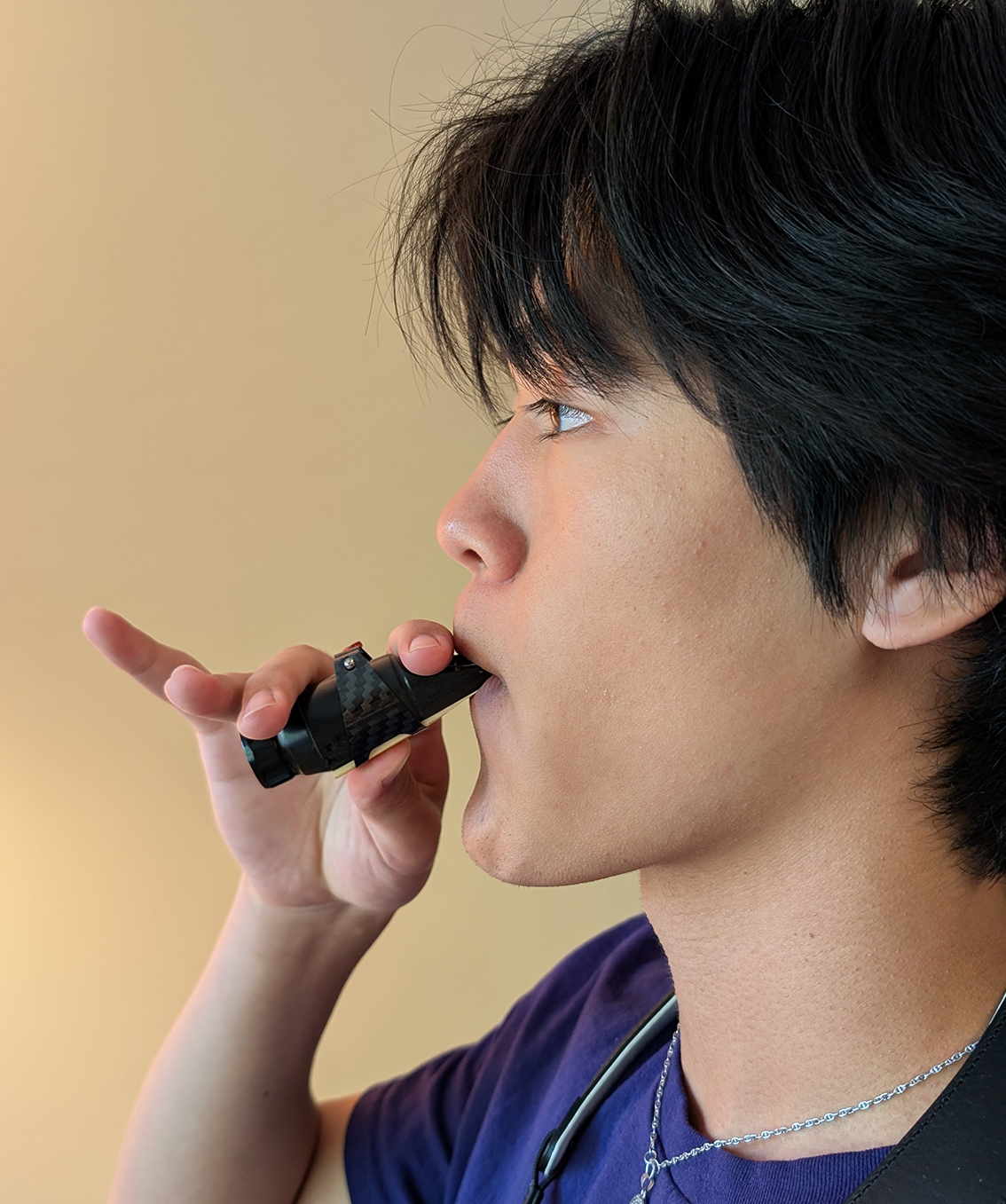
A weak or spread sound often points to an issue with the embouchure. Encouraging students to form a round embouchure with a full bottom lip as if they are whistling is crucial.
Most students that I see are pulling their corners back like they are smiling which drastically thins out the bottom lip. Reminding your students in a jovial manner that “there is no smiling in band” is a good way to remind saxophonists that the ideal embouchure involves pulling the corners of the embouchure in towards the sides of the mouthpiece for a round, tall shape. The other natural side effect of forming the lips like you are whistling is that the chin will be flat. The bottom lip should form a cushion between the reed and the bottom teeth. Ensure that students are not rolling their bottom lip in or out too much or else the cushion will not be between the teeth and reed which will continue to distort a clear tone.
How to Test the Embouchure
A great test to see if the embouchure is correct is to play the mouthpiece by itself with a drone and try to match concert A on an alto saxophone mouthpiece. Singing the pitch with your voice first is preferred! I recommend checking for concert C6 for Soprano, A5 for Alto, G5 on Tenor, and E/Eb5 on baritone.
Moving & Changing the Embouchure Within Different Ranges
Another common snag related to embouchure for saxophonists is moving/changing the embouchure when trying to access different ranges of the instrument. Saxophonists will find more success in keeping a resonant sound across their full range that blends well in classical settings when thinking of their embouchure like a mask. When students make their embouchure mask (whistle face discussed previously) it should not add pressure to access high notes or loosen up (drop the jaw) to access the low notes. I think of the tone as a sacred equation of your embouchure + air = TONE. If the embouchure changes as we move around the saxophone, so will our tone.
After playing the mouthpiece pitch exercise outlined above, I’d recommend playing a descending C major scale from third space C down to low C in front of a mirror. When practicing in a mirror, you’ll be able to see if your embouchure mask is staying intact or moving! Watch especially for the chin to wiggle or collapse in the mirror if low notes typically give you trouble!
Keep in Mind
Taking in the correct amount of mouthpiece is another critical aspect for a good tone. I recommend alto players to start by placing their finger on the curve of the top of the mouthpiece and then touching their upper lip to the finger. This is typically a great place to start!
Air Support
Proper air support on the saxophone takes more effort than we typically realize. I spend a good deal of time focusing on these two pieces to air support: Tongue position and support from the core.
Conceptualizing this topic for saxophonists can be tricky, so I practice the sensation of proper air support by shushing loudly.
When you make the “SHH” sound you make an oral cavity position(voicing) that is high and allows for fast, focused air to move into the instrument. You should also feel the sides of your tongue touching the molars in the back of your mouth. This connection is so important and makes it nearly impossible to puff out your cheeks, which drastically slows down your air speed.
The other important thing that happens when you “SHH” very loudly is your core engages and it feels like you are doing a crunch/sit up. You should feel this sensation of the engaged core every time you play the saxophone at any dynamic. That’s right! Your core should be this engaged even at the piano dynamic. You’ll know right away if the tongue position or core engagement is lacking if you play softly and hear a lot of air in the sound.
*Keep in mind the high tongue position when you add articulation in. “Dee” will be a more effective syllable than “Dah” so that we maintain our oral cavity shape(voicing).
Reed Selection and Care
A poor-quality or improper strength reed can greatly contribute to a thin or buzzy sound. It is important to do routine reed checks and develop a reed rotation.
An ideal reed offers the saxophonist the right amount of resistance for their embouchure and mouthpiece. It is typical for beginners to play on a 2.5 strength reed (check out JUNO!) and move up from there as the embouchure gets stronger. You’ll know that the reed has gotten too soft when you aren’t able to access the high and low registers of your instrument and all of your notes sound buzzy and lack resonance. If this is happening even on new-out-of-the-package reeds then you know it’s time to move up a strength!
At some point your embouchure will be developed and not require any more resistance, so you’ll continue to play on the same strength reed from there. For me, that strength is a 3 or 3.5.
Remember that different saxophonists play on more or less resistant reeds, but it does not indicate how skilled you are on the instrument! Rotate through at least 4 reeds so that they last longer and also carefully inspect reeds for cracks or imperfections. Playing on the same reed every day will result in a short lifespan of the reed. Storing your reeds in a case such as the Vandoren Hygro Reed Case is very beneficial for consistency.
Final Thoughts
Getting past these saxophone snags requires patience and consistent practice!
By spending time on the above material, we can remove these roadblocks to becoming more confident musicians that are able to express music more freely.
Incorporating these quick fixes into your practice sessions or band rehearsals can make a significant difference in your students’ playing and can help foster a more enjoyable and successful musical experience. Don’t get discouraged by the snags, we’ve all been through them - I often remember and reference the old saying “You don’t have to be great to start, but you have to start to be great!”

About Brandyn Taylor
Atlanta-based music educator, Brandyn Taylor, is the principal saxophonist and operations lead for the 116th Army Band and is in demand as a clinician throughout the state. In addition to mentoring a thriving private studio of students from across the metropolitan region, he has been a professor of saxophone at Georgia State University, Reinhardt University, and currently co-hosts the Atlanta Saxophone Day with Dr. Scott Stewart.
As a performer, Brandyn has played with the Atlanta Symphony Orchestra, Atlanta Ballet, Macon Symphony, Columbus Symphony Orchestra, Atlanta Saxophone Quartet, Bent Frequency, Terminus Ensemble, and Chamber Cartel. In his work as an Atlanta freelancer, he has performed with Grammy Award winners Patti LaBelle, Maxwell, Stewart Copeland, and Brandon Bush. Brandyn has been featured on various NPR programs broadcasted across the north and southeast including “Atlanta Music Scene”, “In a Mellow Tone”, and MIT’s “Not Brahms and Liszt”. He made his Nashville recording debut in the summer of 2014. Former students have been awarded top prizes/chairs in competitions across the country and have earned full-ride scholarships to study music at prestigious universities.
Brandyn holds degrees in music performance from Columbus State University and Georgia State University. His primary teacher was Dr. Jan Berry Baker, with additional studies from Dr. Frederick Hemke, Joseph Lulloff, and Mace Hibbard. Brandyn is a Vandoren Artist-Clinician and a Conn-Selmer Performing Artist.